People
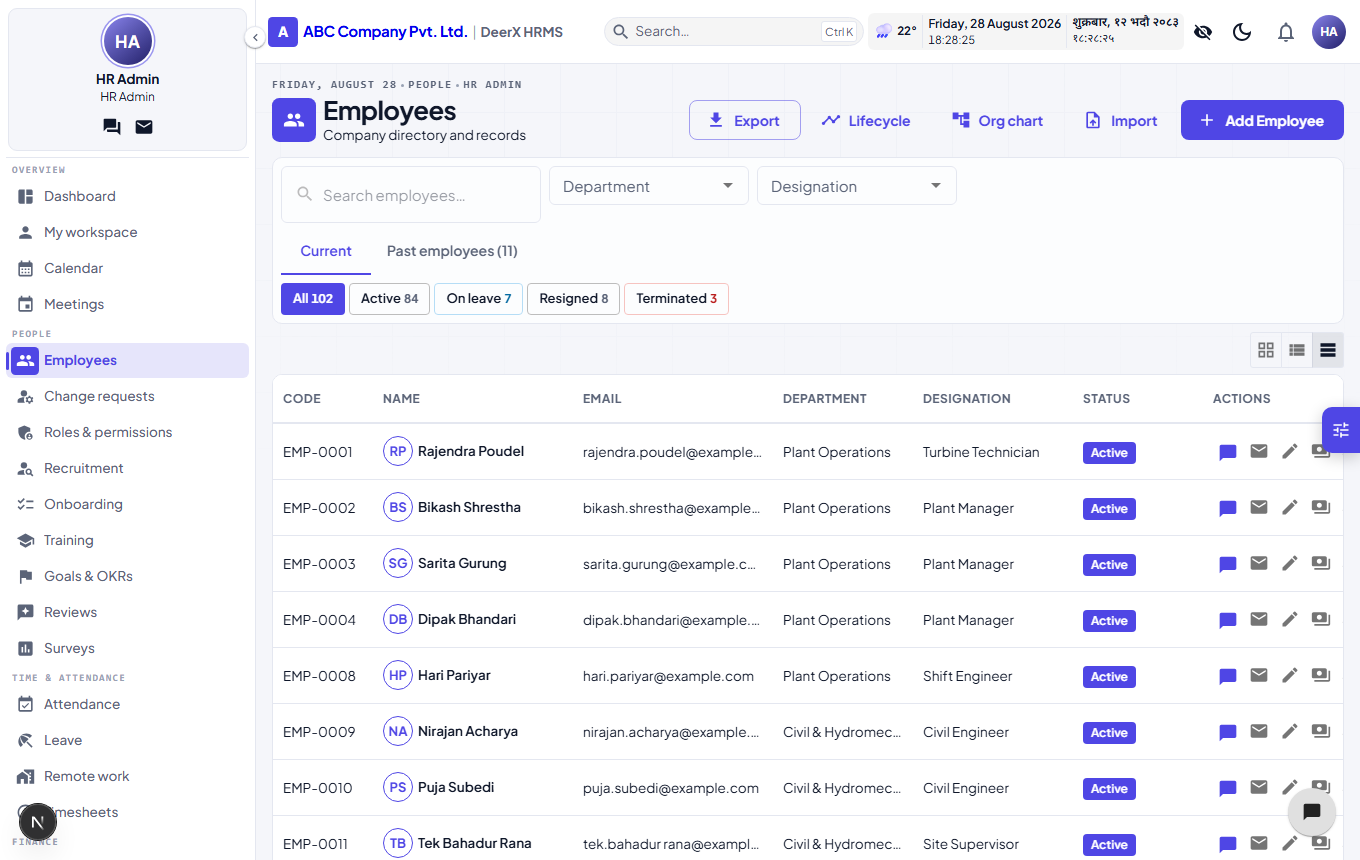
One record per person, and everything else reads from it.
The same employee exists three times — in a spreadsheet, in the payroll file, and in whoever knows they transferred in March. When the three disagree, payroll is wrong and nobody can say when it started.
01
A person is one record. Their department, designation, manager and joining date live there, and payroll, attendance and leave all read the same row — so a transfer changes one thing, not four.
02
Changes are events, not edits. Confirmation, transfer, promotion and exit are each approvable, dated and kept, so the record answers “what was true in March” rather than only “what is true now”.
03
Everyone can see their own file. Profile, documents, balances and payslips are self-service, which is what stops HR being a lookup service for questions the record already answers.
What is in People
Employee records
Profiles, departments, designations, prior experience, per-field change log.
Org chart
Reporting lines rendered from the same records payroll reads.
Lifecycle events
Confirmation, transfer, promotion, exit — each an approvable event.
Documents
Employee files and a shared repository with versioned access.
E-signature
Signature requests against a document; each signature its own record.
Checklists
Templated onboarding and offboarding tasks with owners and due dates.
Self-service
Everyone sees their own profile, balances, payslips and documents.
What it does not do
Stated on purpose. A page that claims everything tells you nothing.
No drag-and-drop org chart — reporting lines come from the manager field, so the chart cannot disagree with payroll.
Custom fields are not open-ended. Anything payroll might one day read has to be a real column, not a JSON blob nobody can query.
Keep reading